Plastic food container mould cost is decided by more than the quoted tool price. The larger cost drivers are cycle time, cavity balance, resin use, scrap rate, maintenance access, and whether the mould can keep stable dimensions during long production runs.
For packaging buyers, the right question is not only "How much is the mould?" It is also "How many accepted containers can this tool produce per hour, and what support is needed to keep that output stable?"
Cycle Time Starts with Mould Design
A fast food container mould needs balanced filling, efficient cooling, clean venting, and reliable ejection. If the mould fills unevenly, the processor may slow the machine to avoid short shots or deformation. If cooling is weak, the container may look acceptable at first but fail to reach the target cycle in daily production.
Buyers should ask suppliers to explain expected cycle time, cooling layout, runner type, material assumptions, and machine requirements. For thin-wall containers, the injection machine's speed, clamp force, shot capacity, and cooling water capacity should be checked before the mould is approved.
How Moulds Reduce Unit Cost
Multi-cavity moulds can reduce unit cost by producing more containers per shot, but higher cavity count only helps when every cavity fills and cools consistently. A poorly balanced high-cavity mould may create more sorting work than a lower-cavity tool with stable output.
Resin savings also matter. Good mould design helps control wall thickness and part weight without weakening the rim, base, stack ring, or lid-fit area. Saving a small amount of resin per container can become significant when the line produces millions of parts per year.
Maintenance Planning Protects Long-Term Value
Food container moulds should be designed for cleaning, wear inspection, insert replacement, and spare-part access. Hot runner tips, ejector components, wear plates, and sealing areas need practical service paths so maintenance teams can respond quickly when production volume is high.
A low initial price can become expensive if the tool is difficult to service, lacks spare parts, or needs repeated correction after sampling. Buyers should compare expected maintenance routines and after-sales support alongside the steel and runner quotation.
Automation and Quality Checks
Robotic take-out, stacking, IML handling, and downstream packing all affect mould economics. If the container sticks, deforms, or stacks poorly, the line may lose the speed advantage promised by the injection press.
Before shipment approval, buyers should check sample dimensions, lid fit, stack height, part weight, appearance, cycle time, and rejection rate. For containers used with hot filling, chilled food, or delivery packaging, testing should reflect the actual use case instead of only a room-temperature sample review.
Choosing a Cost-Effective Mould Supplier
A strong supplier will ask about annual output, machine model, resin grade, filling process, lid or film-seal requirement, automation layout, and quality standard. Those questions help connect mould design to total production cost.
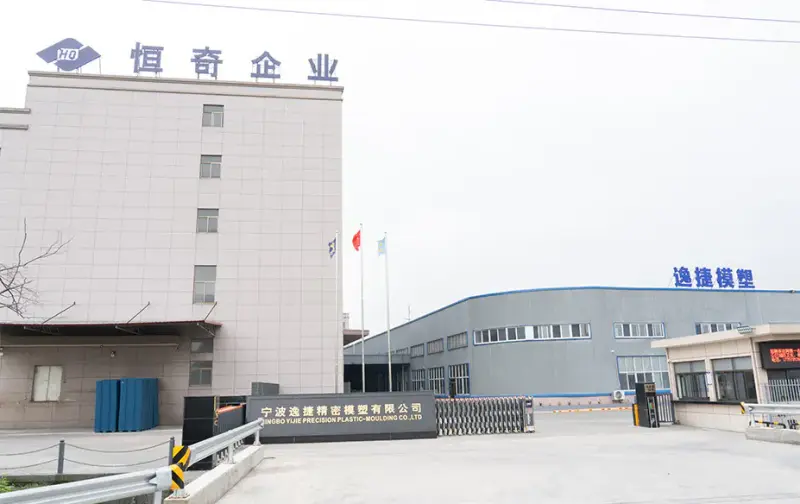
Hengqi designs plastic food container moulds for thin-wall boxes, sauce cups, round containers, IML cups, and matching lid systems. The practical goal is repeatable accepted output: shorter cycles, controlled resin weight, fewer stoppages, and less rework across the life of the mould.